Sustainability Compliance UAE: What Brands Must Know
Sustainability compliance UAE explained—learn how packaging, labeling, and claims impact product registration and approvals with Product Registration UAE.
4/20/20263 min read
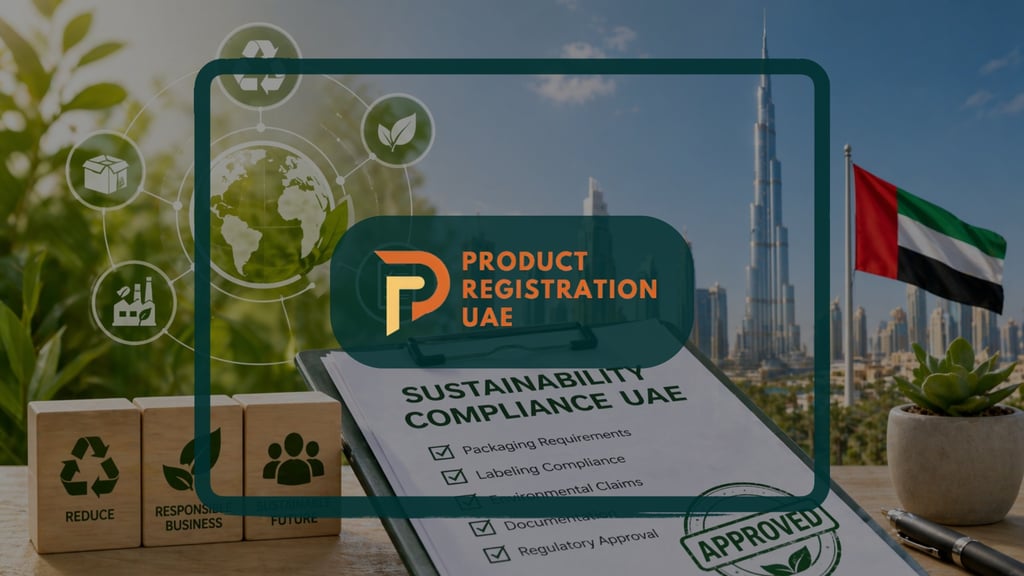
Sustainability Compliance UAE:
What Brands Must Know Before Product Registration
Author: Product Registration UAE Team
Sustainability in the UAE is no longer a marketing angle—it is increasingly tied to how products are evaluated, labeled, and approved for market entry.
Brands that treat sustainability as a secondary consideration often face unexpected delays, label rejections, or compliance gaps during product registration.
This guide explains how sustainability compliance intersects with UAE product registration and what brands must align before submission to avoid costly setbacks.
Why Sustainability Now Affects Product Registration in UAE
Regulatory expectations in the UAE are evolving alongside global sustainability trends.
Authorities are placing greater scrutiny on product claims, materials, and overall environmental impact—especially in categories such as cosmetics, food, supplements, and household products.
This shift means sustainability is no longer optional. It directly influences whether a product can be approved, how it is labeled, and how it is positioned in the market.
What Sustainability Compliance Means in UAE
Sustainability compliance in the UAE goes beyond environmental messaging. It involves aligning your product with regulatory expectations across multiple areas:
Packaging materials and recyclability considerations
Ingredient sourcing and safety standards
Accuracy of environmental or “green” claims
Transparency in product documentation
Authorities evaluate whether sustainability-related claims are supported, verifiable, and aligned with approved product data.
Key Areas Where Sustainability Impacts Product Approval
Packaging and Materials
Certain materials or packaging formats may raise concerns if they conflict with environmental expectations or local regulations. Inconsistent packaging information can also trigger delays during submission.
Product Composition
Ingredients must align not only with safety standards but also with any sustainability claims made. Unsupported claims related to “natural,” “organic,” or “eco-friendly” formulations can lead to rejection.
Labeling and Claims
Sustainability-related claims are one of the most sensitive areas during review. Authorities assess whether claims are:
Scientifically supported
Not misleading
Consistent with product documentation
Incorrect or exaggerated claims can result in immediate rejection or required label revisions.
Supply Chain Transparency
While not always explicitly required, increasing attention is placed on traceability and responsible sourcing—especially for certain product categories.
Common Mistakes That Lead to Rejection or Delays
Brands entering the UAE market often make avoidable mistakes when integrating sustainability into their products:
Using sustainability claims without supporting evidence
Misalignment between label claims and technical documentation
Overstating “organic” or “eco” positioning
Ignoring packaging compliance requirements
Submitting incomplete or inconsistent data across systems
These issues can delay approvals, trigger re-submissions, or require full label redesign.
How Sustainability Impacts Market Access in UAE
Failure to align with sustainability expectations does not only affect approval—it can also impact market access.
Consequences may include:
Product registration rejection
Import delays at customs
Mandatory label corrections
Increased scrutiny from authorities
In some cases, products may need to be re-evaluated entirely before they can enter the market.
How to Prepare for Sustainability Compliance Before Submission
A proactive approach is essential to avoid delays.
Key steps include:
Reviewing all sustainability claims for accuracy and evidence
Aligning packaging, labeling, and formulation data
Conducting regulatory pre-screening before submission
Ensuring documentation consistency across all platforms
Validating compliance with relevant UAE authorities
This preparation significantly reduces the risk of rejection and accelerates approval timelines.
Why Early Sustainability Alignment Saves Time and Cost
Addressing sustainability requirements early in the process prevents repeated submissions, label changes, and compliance corrections.
Brands that integrate sustainability into their regulatory strategy from the beginning benefit from:
Faster approval timelines
Reduced compliance risks
Stronger market positioning
Greater flexibility in product distribution
Final Insight: Sustainability Is Now a Compliance Factor
Sustainability in the UAE is no longer separate from product registration—it is part of the approval process itself.
Treating it as a regulatory requirement rather than a marketing feature allows brands to avoid delays, maintain compliance, and enter the market with confidence.
Read More Insights on UAE Product Compliance
Understand how regulatory pre-screening in UAE helps identify sustainability and compliance gaps before submission, reducing approval risks.
Explore how improving product submission quality in UAE ensures alignment between claims, documentation, and regulatory expectations.
Learn how Arabic labeling requirements in UAE impact sustainability claims and why incorrect labeling can lead to rejection.
Contact us or use the chatbot to ensure your product meets sustainability compliance requirements before submission.